

What you should know about driving in snow and ice
Driving in winter can quickly shift from a scenic experience to a stressful challenge: when asphalt disappears under a white blanket or, worse, hides beneath an invisible layer of ice (the dreaded “black ice”), the physical rules of driving change radically. The key to handling these situations lies not only in the vehicle’s technical equipment, but also in the driver’s mindset: calmness, smooth movements, and the ability to anticipate the car’s reactions are essential to reaching your destination safely. Let’s take a look at some tips on how to drive on icy roads.
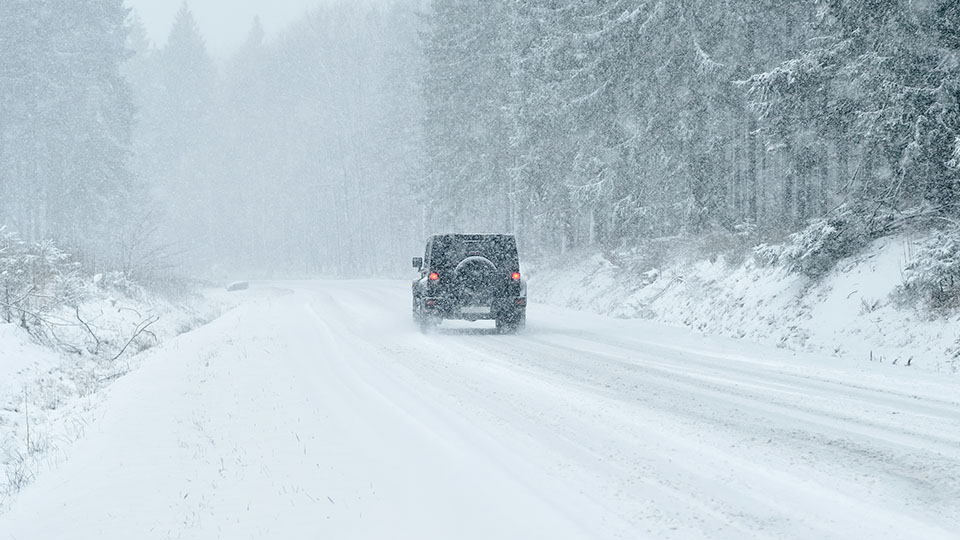
Driving on ice: the key word is “safe distance”
The secret to maintaining control on low-grip surfaces is to drive as smoothly as possible. Any abrupt input whether it’s a sudden steering movement, hard braking, or sharp acceleration breaks the fragile balance between tire and road, triggering a skid.
Driving on ice therefore means accelerating with extreme gradualness and, above all, keeping a much greater distance from the vehicles ahead than usual, giving yourself time to react without slamming on the brakes. On snow or ice, in fact, braking distances can triple or even quadruple compared to dry asphalt.
Another useful tip when driving on ice or snow is not to fix your gaze on the bumper of the car in front of you, but to look far ahead to anticipate curves or potential obstacles. This allows you to slow down using engine braking rather than the brake pedal.
How to handle the unexpected on icy roads
Despite caution, a car may still lose grip when driving on ice or snow. Knowing what to do in those few seconds can make the difference between a scare and an accident. For example, if you turn the steering wheel but the car keeps going straight, don’t steer more, as this would only worsen the situation. Instead, slightly straighten the steering to help the front wheels regain grip, lift your foot off the accelerator, and once contact is restored, guide the car back toward the curve.
In the opposite case if the rear of the car starts sliding outward stay calm and avoid braking sharply, as instinct might suggest. Steer in the same direction the rear of the car is moving and look toward where you actually want to go.
If, like most modern vehicles, your car is equipped with ABS, in an emergency press the brake pedal firmly without pumping it. You’ll feel a vibration in the pedal: this is the system working to prevent wheel lock-up, allowing you to keep steering while slowing down.
Practical checks before driving on snow and ice
Many accidents on icy roads could be prevented by carrying out a few simple checks before setting off. First of all, thoroughly clear not only the windshield but also the roof of the car: snow accumulated on top can slide forward during braking, completely blocking your view, or fly off and hit vehicles behind you.
Also make sure the headlights are free of ice buildup to ensure maximum visibility. If you expect particularly challenging stretches, temporarily disable the traction control system only when starting from a standstill on an uphill slope, as it can sometimes cut too much power and prevent the vehicle from moving.

Your mobility, our experience
Trust Locauto: for over 40 years we have been supporting those who travel for work or pleasure.

