

Traffic Information, Limited Traffic Zones, and Parking in Ostuni
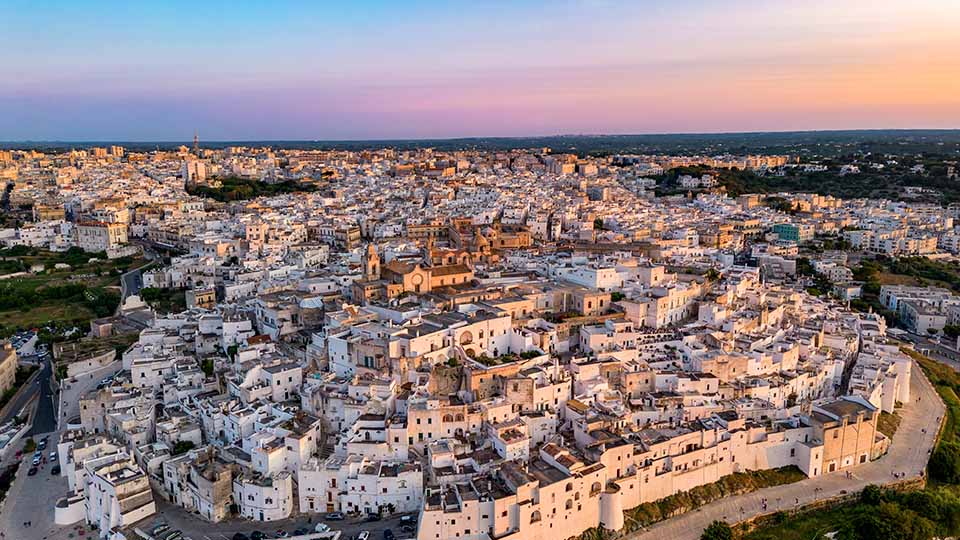
Known as the White City, Ostuni is distinguished by its historic center of whitewashed houses, winding alleys, and stairways that climb the hill up to the cathedral; its charm stems from the contrast between the white of the town, the blue of the sky, and the green of the olive trees surrounding the city, just a few kilometers from the Adriatic Sea. It’s a destination worth visiting for its architecture, scenic little squares, shops, and restaurants in the center, but also as a starting point for exploring the Itria Valley and the beaches along the coast. Before venturing into its historic center—where narrow streets and traffic restrictions can make getting around a bit tricky—here are a few tips on navigating the streets.
The historic center, often called Rione Terra, spreads out around the top of the hill in an irregular pattern of alleys, arches, passageways, and stairways. It is not designed for car traffic: many of the streets are narrow, winding, and hilly, making it ideal for exploring on foot. The walk can begin at Piazza della Libertà, home to the Column of Sant’Oronzo and Palazzo San Francesco, and then head uphill toward the Cathedral of Santa Maria Assunta, with its distinctive late-Gothic façade.
Along the way, you’ll come across terraces and vistas that open out onto the plain of olive groves and, on clear days, toward the sea. It is precisely this alternation between cozy alleyways and sweeping views that sets Ostuni apart from other historic towns in Puglia. It’s worth taking the time to explore even the less-traveled streets, stopping at artisan shops and restaurants serving local cuisine.
The historic center is subject to a restricted traffic zone (ZTL ), for which the municipality issues specific permits to authorized categories. Access rules may vary depending on the time of year and the regulations in effect; for this reason, it’s not advisable to rely solely on times remembered from previous visits or on navigation system directions alone.
Guests staying at a lodging facility in the center of Ostuni should inquire in advance about any procedures for reaching the property, unloading luggage, or gaining temporary access to the restricted traffic zone (ZTL). Booking a room does not automatically grant permission to drive through the area. The City provides a procedure for requesting permits, specifying the categories of people eligible to apply and the required documentation. Before departing, it is therefore advisable to consult the City’s up-to-date information and pay attention to traffic signs and checkpoints.
To visit the historic center, it’s generally more convenient to leave your car outside the old town and continue on foot. Options to consider include parking areas near Piazza della Libertà and other parking lots on the outskirts of the center; be sure to check on-site for rates, availability, and directions to the pedestrian zone.
During the summer, when Ostuni welcomes many visitors, the demand for parking increases, and some areas may be subject to seasonal regulations. For example, the city has designated Urban Planning Zones to manage parking during periods of peak tourist traffic. It is therefore advisable to check the regulations in effect at the time of your trip, especially during the summer months.
If your itinerary also includes the beaches or other towns in the Itria Valley, a car is very useful for getting around between the different locations. When visiting Ostuni, however, it’s best to park and leave the wheel behind for a few hours.

Your mobility, our experience
Trust Locauto: for over 40 years we have been supporting those who travel for work or pleasure.

